Rockfall Protection Works Along the Paths of Shri Mata Vaishno Devi Ji Shrine,

Katra, Jammu & Kashmir, India |  Shri Mata Vaishno Devi Shrine Board (SMVDSB)

Overview

Shri Mata Vaishno Devi Ji is one of the most revered pilgrimage sites in Hinduism, located in the Trikuta Mountains of Jammu and Kashmir. The sacred journey of approximately 13 kilometers from Katra to the Vaishno Devi Temple is a spiritual trek for millions of devotees every year. However, the region’s unique topography, situated in Seismic Zone V and at an elevation of 1,765 meters, makes it highly susceptible to natural hazards such as earthquakes, rockfalls, landslides, and extreme weather conditions. These factors have posed significant risks to the safety of pilgrims.

In response to the increasing frequency of rockfalls and landslides, the Shri Mata Vaishno Devi Shrine Board (SMVDSB) initiated a phased project to address these hazards. The project aims to mitigate risks and enhance the safety of pilgrims by stabilizing and protecting 33 vulnerable locations along the trek route.

Challenge

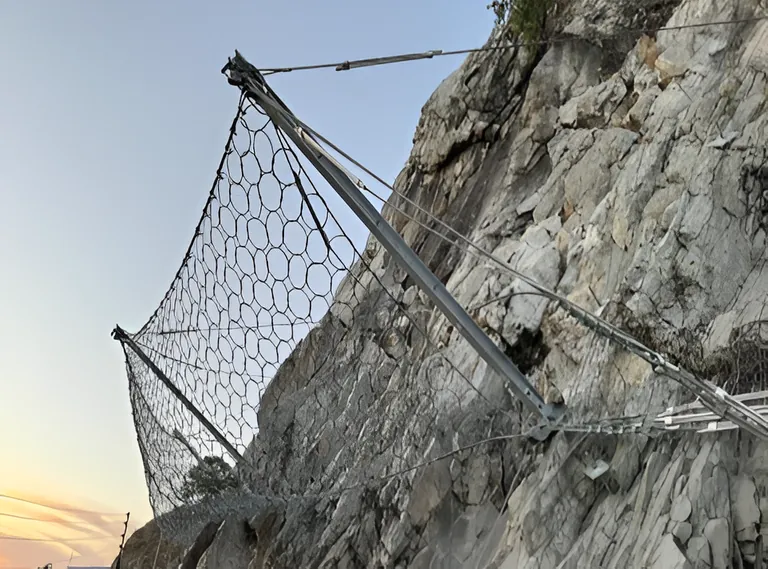
The Rockfall Mitigation works at Location 6 of Phase III, located at Chainage 0.700 km to 0.775 km, are of particular importance. This stretch, part of the 14-kilometer trek, has seen a growing incidence of falling stones and landslides, endangering lives. The topography, consisting of limestone and Siwalik rocks, combined with seismic activity, makes the area highly vulnerable. Therefore, advanced techniques such as high-energy absorption rockfall barriers, high-strength steel wire mesh, rolled cable nets, shotcrete, and various concrete applications (e.g. grouting, anchoring) are being employed to stabilize the slopes and prevent future occurrences. The ultimate goal of this project is to safeguard both the pilgrims and the natural environment of the Trikuta Hills by employing state-of-the-art technologies, ensuring the safety and continuity of this sacred journey for years to come.

Solution

To protect the pathway from falling stones along the trek to Mata Vaishno Devi Bhawan, TechFab India proposed a robust solution involving the installation of two sets of rockfall barriers – Set A1 and Set A2. Set A1 consists of a 6.0 meter high, 3000 kJ barrier, covering a stretch of 30 meters, while Set A2 comprises a 5.0 meter high, 3000 kJ barrier, also covering 30 meters. These barriers are strategically placed to absorb the kinetic energy of falling rocks and prevent them from reaching the pathway.

The design process incorporated rockfall simulations to determine dynamic parameters such as bounce height and translational velocity of falling rocks. Using the 95th percentile of the rockfall distribution, the simulations ensured that the barriers were designed to withstand the most severe scenarios. Furthermore, partial safety factors were incorporated into the design to account for uncertainties and mitigate associated risks.

The rockfall barriers were evaluated based on crash tests stipulated by EAD 340059-00-0106 (formerly ETAG027), ensuring compliance with commercial standards for performance and safety. The selected barriers were favored for their versatility, cost-effectiveness, and rapid construction compared to traditional concrete barriers, making them an ideal choice for the challenging site conditions.

To maintain the integrity and effectiveness of the barriers, TechFab India recommends regular inspections, maintenance, and cleaning of the barriers after each rockfall event, as well as the replacement of any damaged components, to ensure ongoing protection for the pilgrims.

Project Outcome & Performance

The selected rockfall barrier system was chosen for its versatility, cost-effectiveness, and rapid construction, offering significant advantages over traditional solutions like concrete barriers. Its design not only ensures effective energy absorption and rock containment but also provides long-term durability with minimal maintenance. The project, including the installation of other protective measures, was successfully completed in November 2023 and continues to function as intended, effectively preventing further rockfall incidents. This system has proven to be a reliable and sustainable solution, enhancing the safety of pilgrims along the trek and contributing to the overall stability of the site.

Related Sectors
Related Solutions
Related Products