Ground Improvement

Ground improvement is required when in‑situ soil lacks Safe Bearing Capacity (SBC), is highly compressible, or risks settlement and instability under loads. Such conditions affect structural performance and serviceability. Ground improvement solutions improve soil properties by increasing shear strength, enhancing SBC, reducing settlement, and controlling deformation, thereby ensuring stability, durability of infrastructure. TechFab solutions deliver advanced, efficient systems for treating weak soils across varied geotechnical conditions.

Ground Improvement - Full Width Banner

Overview

Available Systems

Success Stories

Products

Overview

Ground improvement systems are advanced geotechnical solutions aimed at transforming weak, compressible, or unstable soils into reliable foundation strata. By modifying in-situ soil characteristics, these systems enhance strength, stiffness, and drainage behaviour, enabling structures to perform safely even under demanding loading and environmental conditions.

Unlike conventional approaches such as deep foundations (piles, drilled shafts), raft foundations, etc., ground improvement techniques work with existing site conditions, making them both resource-efficient and sustainable. These systems optimise load transfer mechanisms and minimise settlement, ensuring uniform performance across the project lifecycle.

The application of ground improvement is critical in projects involving soft clays, loose sands, reclaimed land, and high groundwater conditions. From highways and railways to industrial platforms and storage facilities, these solutions provide a stable base where natural ground conditions would otherwise be inadequate.

The application of ground improvement is critical in projects involving soft clays, loose sands, reclaimed land, and high groundwater conditions. From highways and railways to industrial platforms and storage facilities, these solutions provide a stable base where natural ground conditions would otherwise be inadequate.

Ground Improvement Solutions

01

Shallow Ground Improvement

Shallow Ground Improvement

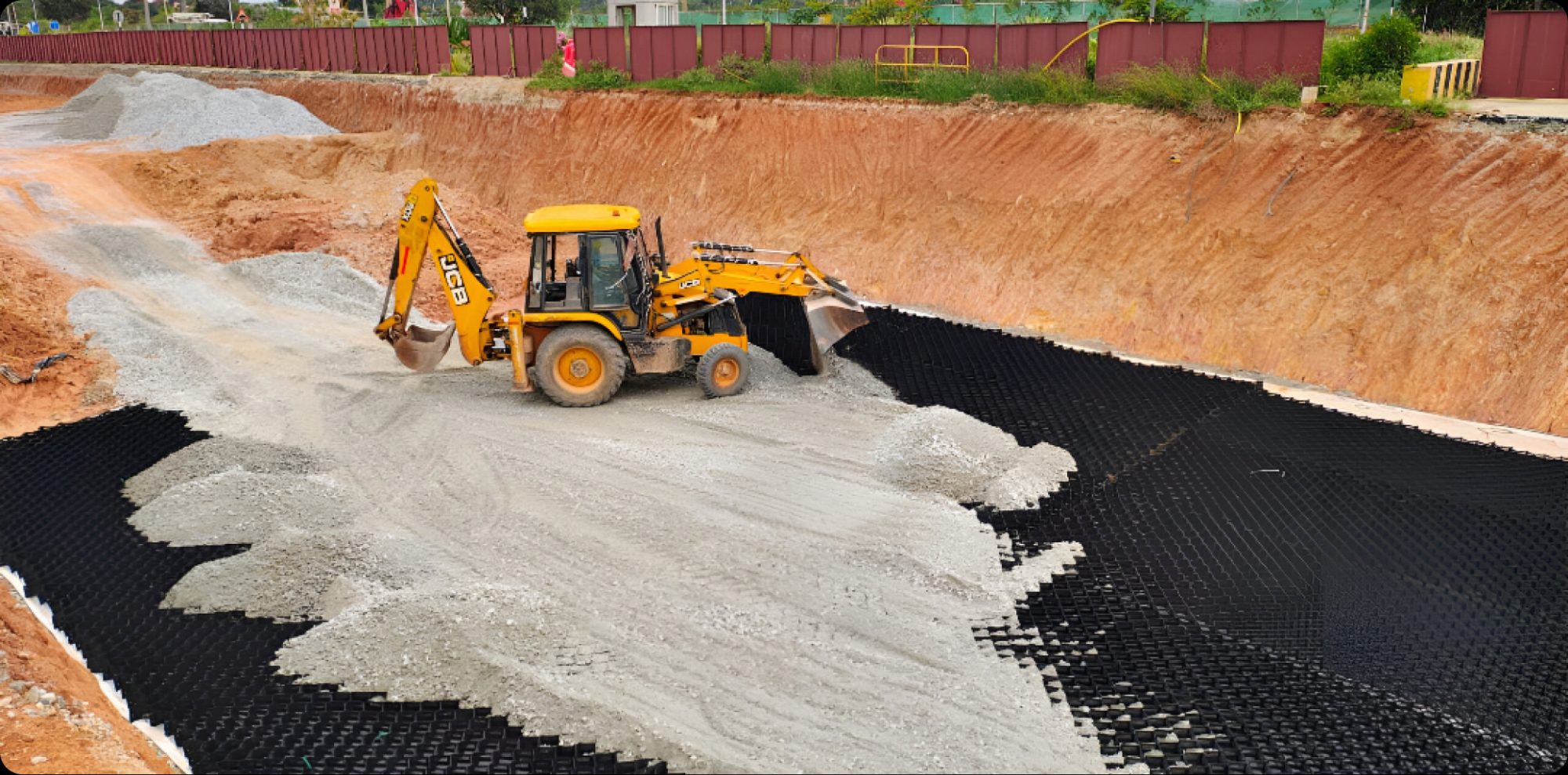
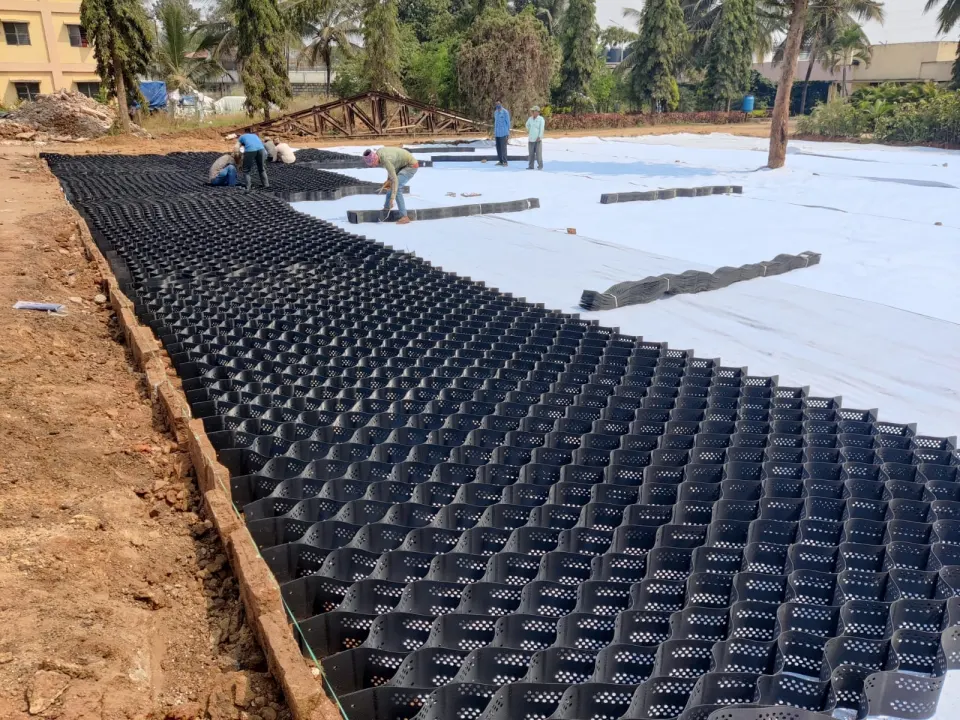
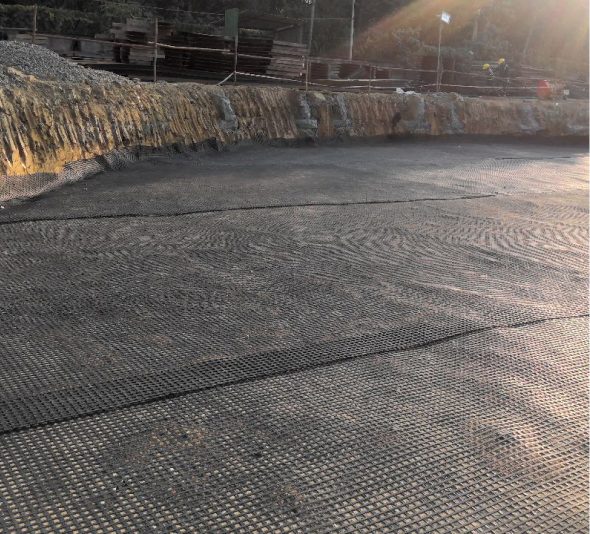
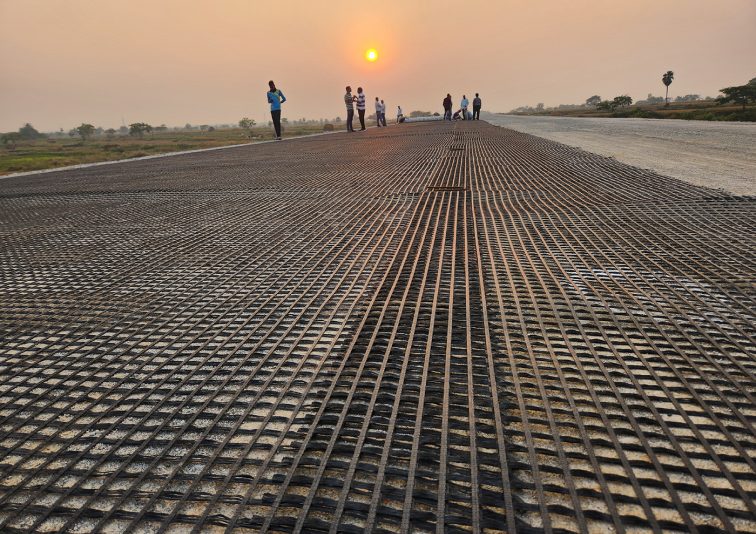
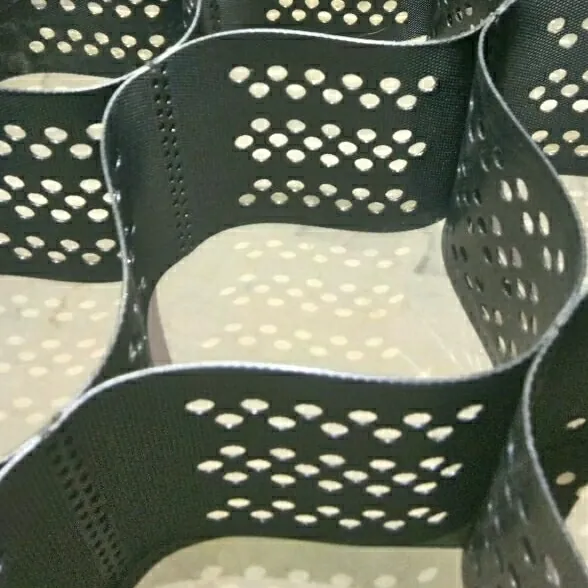
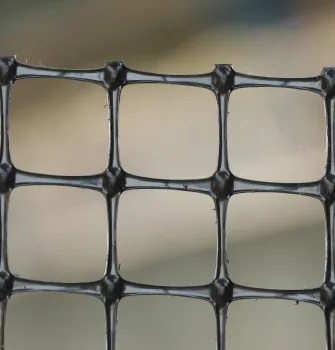
Shallow ground improvement techniques are adopted to enhance the engineering properties of near-surface soils, typically within depths up to 1–3 metres. These methods are suitable where weak soil strata are limited to shallow depth. Techniques such as geocell confinement, geogrid reinforcement, etc., improve safe bearing capacity and reduce deformation. They enable uniform load distribution and minimise differential settlement for structures like pavements, embankments, and lightly loaded foundations.

Know More

02

Deep Ground Improvement

Deep Ground Improvement

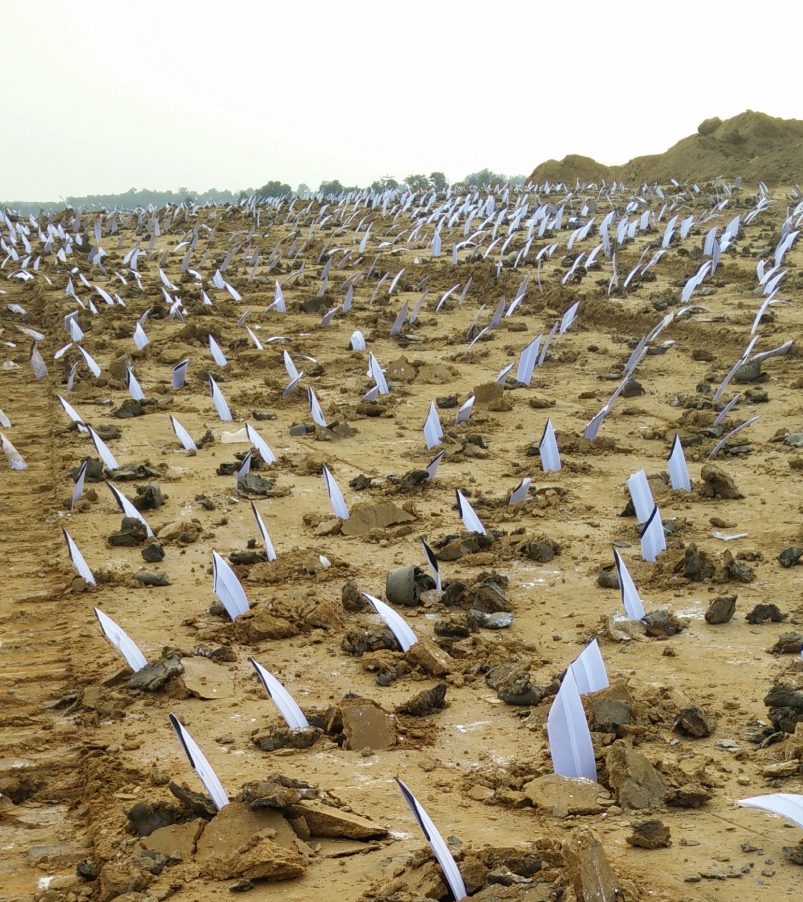
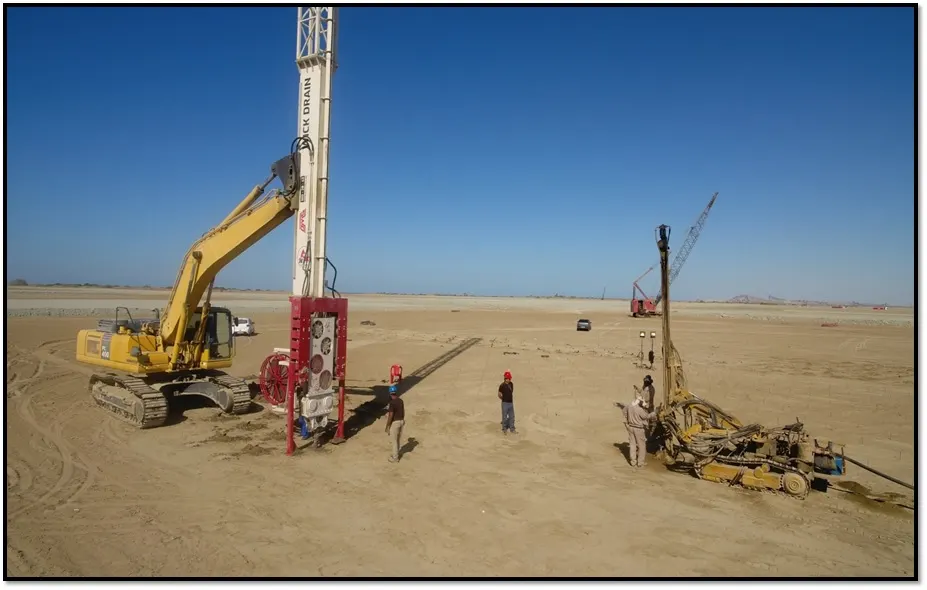
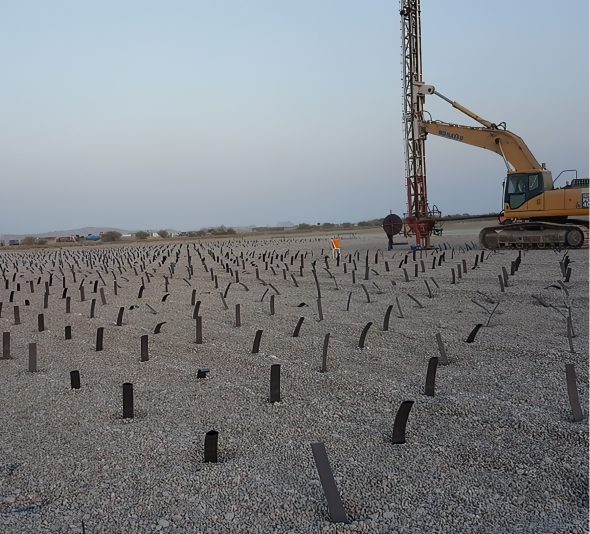
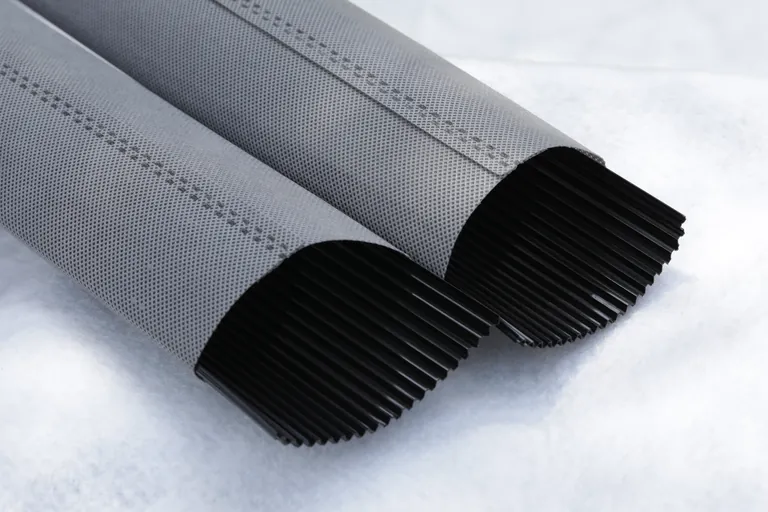
Deep ground improvement is required where weak or compressible soil layers extend to significant depths, making shallow methods ineffective. These techniques enhance subsoil properties by improving shear strength, increasing Safe Bearing Capacity (SBC), and reducing settlement. They ensure stable load transfer and long-term performance of structures on challenging ground conditions. Prefabricated Vertical Drains (PVDs) are commonly used in soft, saturated soils to accelerate consolidation by dissipating excess pore water pressure. When combined with preloading, PVDs enable faster stabilisation and controlled settlement behaviour.

Know More

03

Industrial & Logistics Applications

Industrial & Logistics Applications

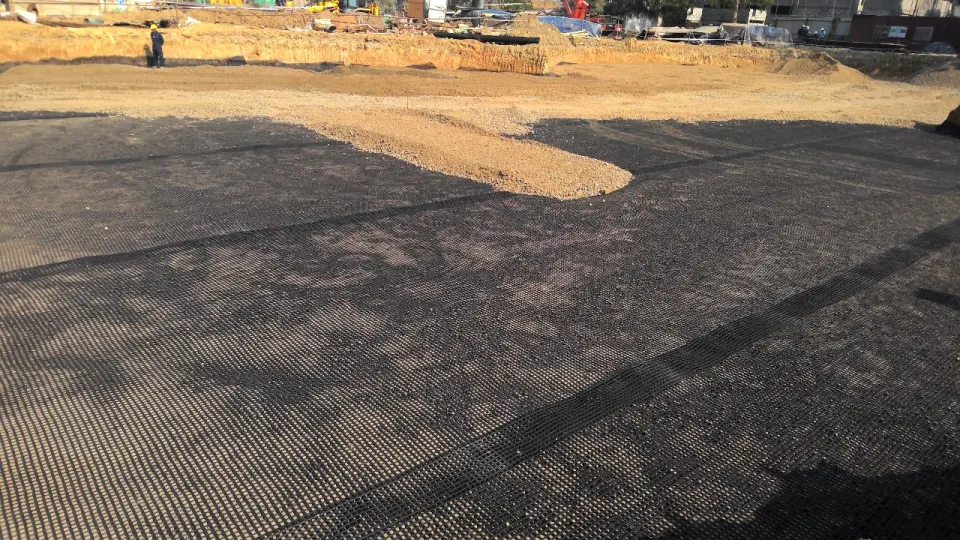
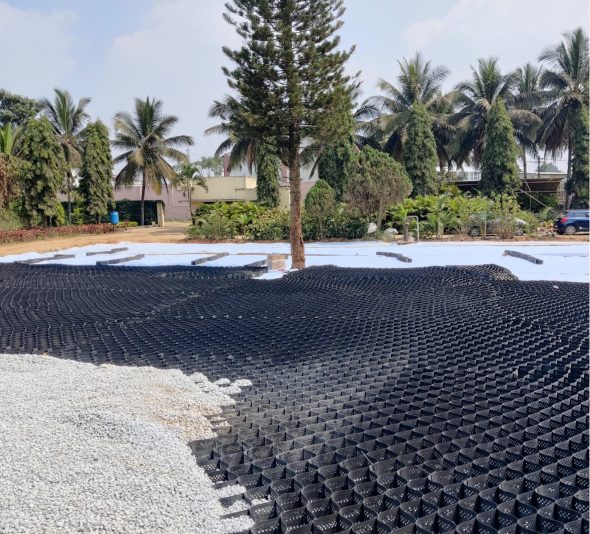
Ground improvement plays a critical role in industrial and logistics applications, where large storage yards, warehouses, and container handling areas demand high load-bearing capacity and minimal settlement. These projects often involve expansive footprints over soft or variable subsoil conditions, requiring uniform ground performance. Techniques such as basal reinforcement systems enhance SBC and ensure efficient load distribution under heavy static and dynamic loads. In logistics zones, controlled settlement is essential for maintaining pavement integrity and operational efficiency. TechFab solutions provide reliable, cost-effective ground-improvement systems tailored for high-performance industrial infrastructure.

Know More

04

Slope Erosion Control

Slope Erosion Control

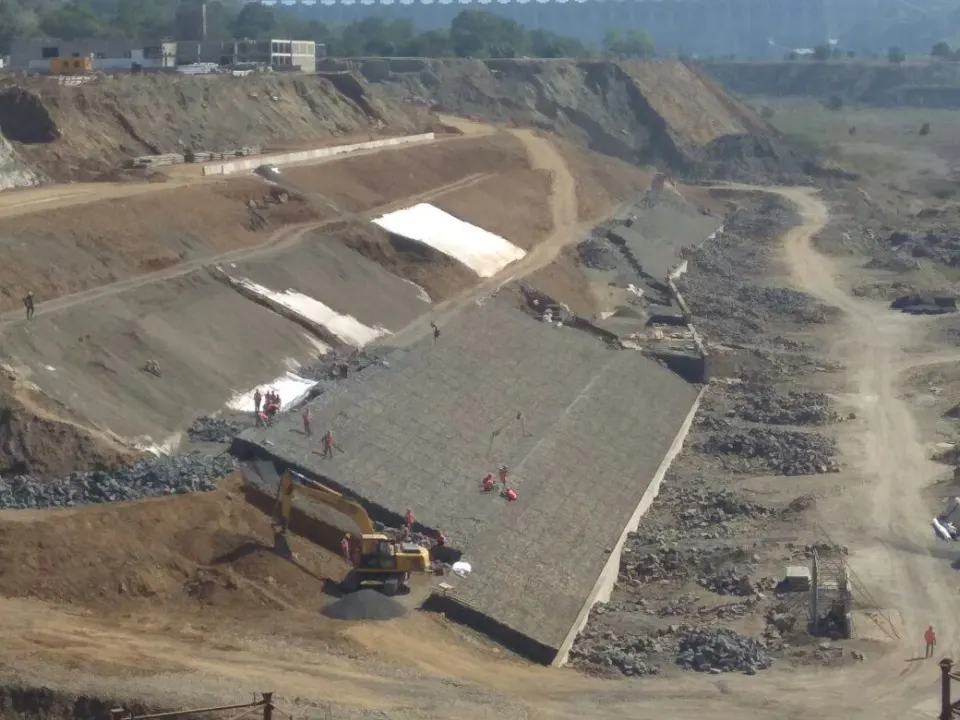
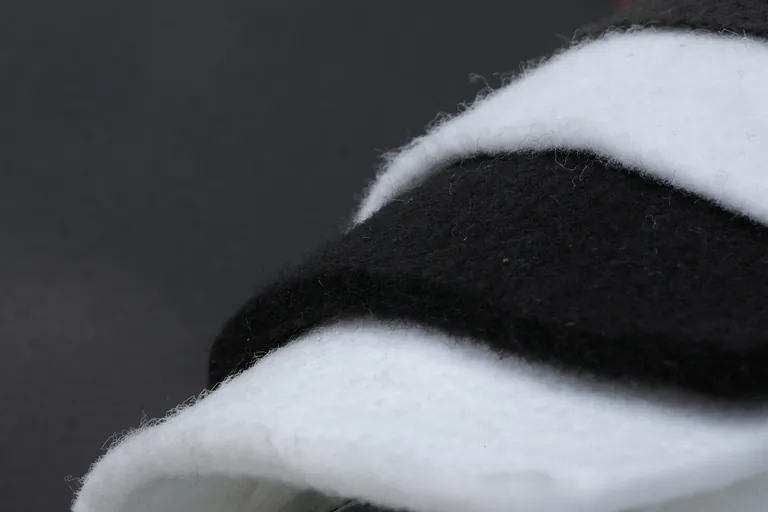
Slope erosion control is critical for mitigating soil degradation and ensuring the stability of exposed or inclined surfaces subjected to hydraulic and environmental forces. These systems enhance surface integrity, attenuate runoff velocity, and facilitate vegetation establishment when required. Solutions such as geotextiles, erosion control blankets, and geocells provide effective topsoil confinement and improve slope resilience. Suitable for geotechnically stabilised slopes, these systems deliver sustained performance by reducing maintenance requirements and safeguarding the long-term integrity of infrastructure and landscape assets.

Know More

Available Ground Improvement Systems

Frequently Asked Questions
(FAQs)

Ground improvement is required when in-situ soil lacks Safe Bearing Capacity (SBC), is highly compressible, or poses risks of settlement and instability. It enhances soil properties to ensure stability, durability, and long-term performance of infrastructure.

Techniques increase shear strength, enhance SBC, reduce settlement, and control deformation, enabling structures to perform safely under demanding loads and environmental conditions.

Cost-effective alternative to deep foundations; increased load-bearing capacity with reduced settlement; improved drainage, faster consolidation, and reduced pore pressure.

Unlike deep foundations (piles, drilled shafts) or raft foundations, ground improvement works with existing soil conditions. This makes it resource-efficient, sustainable, and adaptable to diverse geotechnical challenges.

Applications include soft clays, loose sands, reclaimed land, and high groundwater sites; highways, railways, and embankments; industrial platforms, logistics yards, and storage facilities; and slopes requiring erosion control.

Solutions include Shallow Ground Improvement (geocells, geogrids for near-surface soils); Deep Ground Improvement (PVDs with preloading for soft, saturated soils); Industrial & Logistics Applications (basal reinforcement for heavy loads); and Slope Erosion Control (geotextiles, erosion control mats, geocells).

TechCell Geocell System offers HDPE cellular confinement for load distribution; TechDrain PVD System accelerates consolidation in soft soils; TechFab Biaxial Geogrid provides reinforcement and subgrade stabilization; and TechFab Geotextiles enable separation, filtration, reinforcement, and drainage.

TechFab provides end-to-end support — site evaluation, design development, material optimization, execution guidance, and performance monitoring — ensuring technically sound, economical, and sustainable solutions.