Deep Ground Improvement

Deep ground improvement is required where weak or compressible soil layers extend to significant depths, making shallow methods ineffective. These techniques enhance subsoil properties by improving shear strength, increasing Safe Bearing Capacity (SBC), and reducing settlement, ensuring stable load transfer on challenging ground.

Deep Ground Improvement Banner

Overview

Success Stories

Products

Resources

Deep Ground Improvement Overview

Overview

Deep ground improvement systems are specialised geotechnical solutions designed to enhance the engineering properties of weak soil layers extending several metres below the ground surface. These systems improve strength, stiffness, drainage characteristics, and load-bearing capacity, enabling safe construction on otherwise unsuitable ground conditions.

These solutions are particularly effective in soft clays, silts, peat deposits, reclaimed land, dredged fills, and areas with high groundwater levels where long-term consolidation and stability are critical concerns.

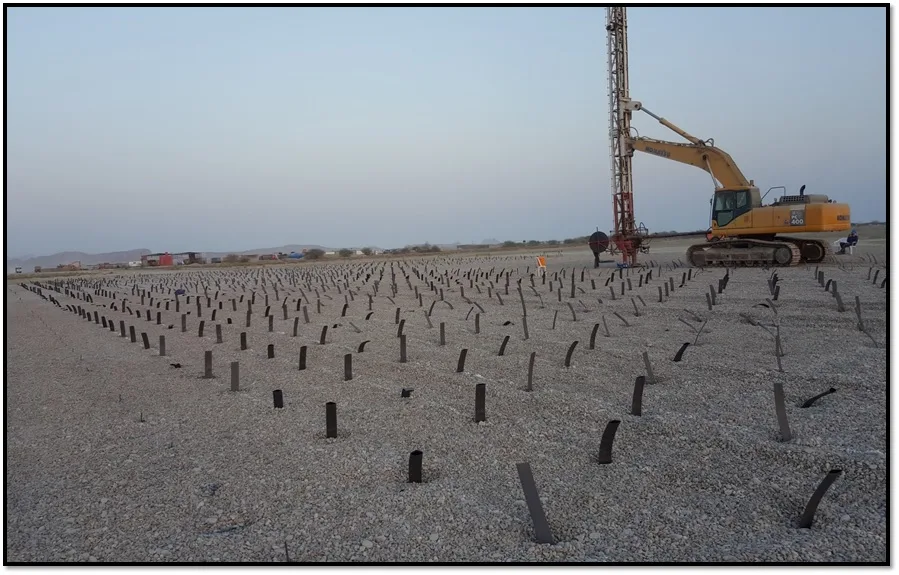
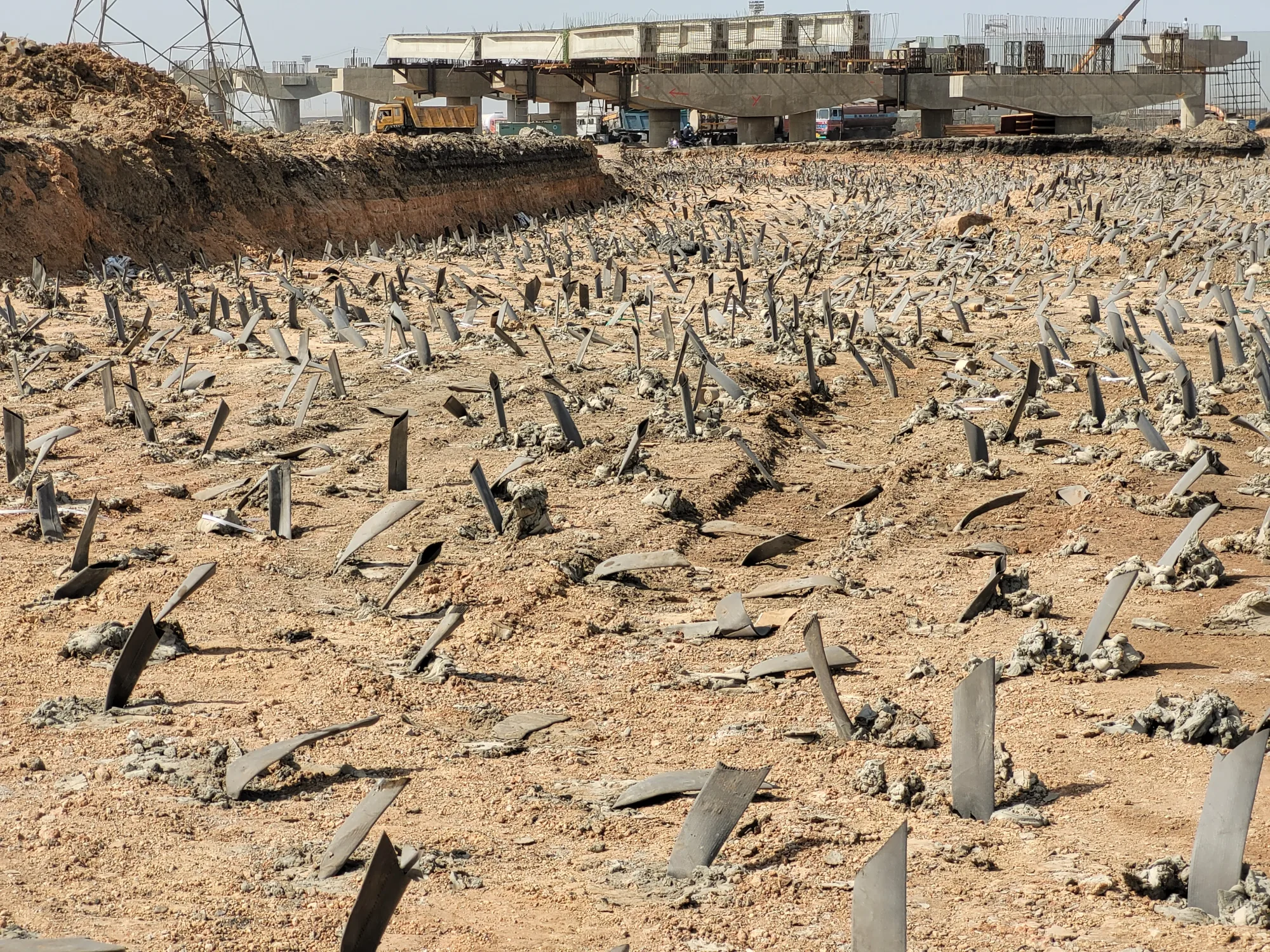
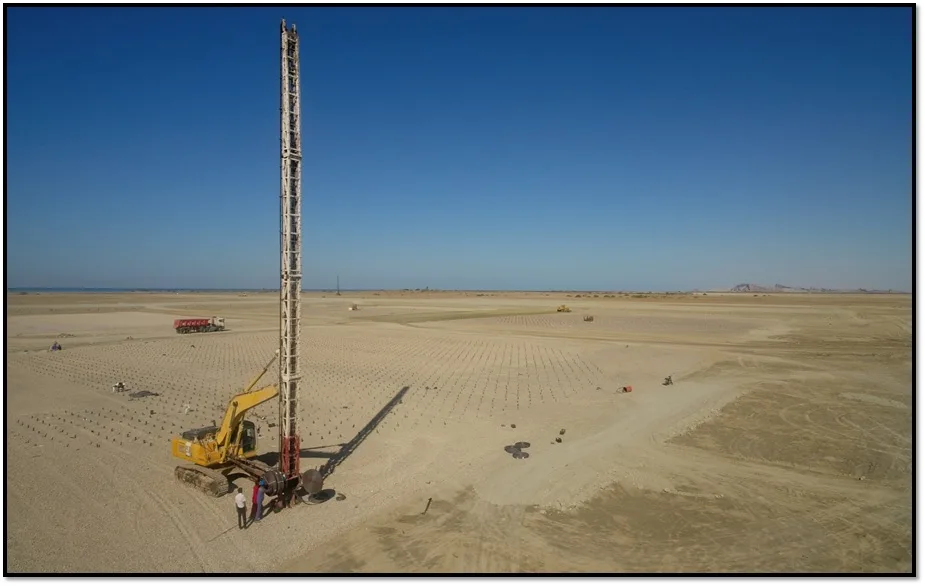
Prefabricated Vertical Drains (PVDs) are commonly used in soft, saturated soils to accelerate consolidation by dissipating excess pore water pressure. When combined with preloading, PVDs enable faster stabilisation and controlled settlement behaviour. Supported by extensive geotechnical expertise, TechFab provides complete technical assistance from site evaluation and design optimisation to installation guidance and performance monitoring.

Resources & Downloads

Technical Specifications
Detailed product specifications and test data
Design Guide
Engineering guidelines and design calculations
Certification Documents
Quality certifications and compliance documents

Frequently Asked Questions
(FAQs)

Deep ground improvement refers to specialized geotechnical techniques used to strengthen weak or compressible soil layers that extend several metres below the ground surface. It improves shear strength, safe bearing capacity (SBC), stiffness, and drainage characteristics, ensuring stable load transfer and long-term performance of structures.

It is required when:

Soil layers are soft, saturated, or compressible at significant depths.

Shallow improvement methods are ineffective.

Projects involve high loads or require long-term settlement control.

Construction is planned on soft clays, silts, peat deposits, reclaimed land, dredged fills, or areas with high groundwater levels.

  • Accelerates consolidation of soft soils.
  • Reduces post-construction settlement.
  • Improves bearing capacity and stability.
  • Provides a cost-effective alternative to deep foundations.
  • Ensures durability and reliability of infrastructure projects.

One of the most effective techniques is Prefabricated Vertical Drains (PVDs) combined with preloading.

PVDs shorten drainage paths, dissipating excess pore water pressure.

Preloading accelerates soil consolidation, controlling settlement behaviour.

Together, they provide faster stabilization and improved ground performance.

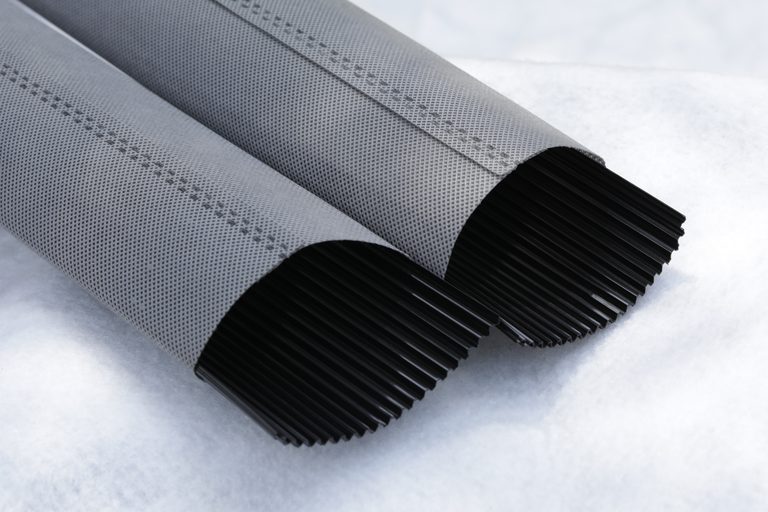
PVDs consist of a polymer core wrapped in geotextile filter fabric.

They allow pore water to escape horizontally towards nearby drains.

Water then flows vertically along the drain to a drainage blanket or permeable layer.

This process accelerates consolidation of deep soft soil deposits.

  • Highway and railway embankments
  • Ports and harbour projects
  • Industrial developments
  • Land reclamation projects
  • Roadways, railway tracks, and landfill applications
  • TechFab offers end-to-end technical assistance, including:
  • Site evaluation and soil investigation.
  • Design optimisation using advanced geotechnical analysis.
  • Guidance during installation of PVDs and related systems.
  • Performance monitoring to ensure efficiency and compliance.

TechDrain Prefabricated Vertical Drains (PVDs) – engineered for high permeability, drainage capacity, and durability in soft soil conditions.