Landslides Mitigation Measures at Km 63 near Chamba Tunnel on Rishikesh - Dharasu Road (NH-34), Uttarakhand

Uttarakhand, India |  Border Roads Organization, India

Overview

The economically and strategically important project i.e., Chardham Highway Development Project was announced to improve the connectivity of four holy Hindu shrines, namely, Kedarnath, Badrinath, Gangotri and Yamnotri. In this project, upgradation and development of the roads will be carried out by connecting all four dhams. During widening of roads to two lanes, some areas are prone to slide due to geology, geomorphology, rainfall, and other reasons. The slide Location is located about 2.3 km after North Tunnel Portal, Chamba, Chamba to Dharasu Highway (NH-34) between 63.310KM to 63.390 KM. The slide zone is exposed and adjacent area is covered by low to moderate vegetation. The angle of the slope ranges from 500-700 and a seasonal nala is present on western side of the slide zone and passing all along the slope towards east direction.

Challenge

During the widening of existing NH-34, the stability of slope mass has been disturbed by toe cutting. The slope has been cut at toe portion and the steep cut slope is standing at height of about 40-50 m without any intermediate benches. The area is prone to heavy rainfall and seismic activity falling under Seismic Zone-V. Closely spaced joints which are dipping opposite to the slope direction at the top portion may cause toppling failure due to steep cutting of slope.

Solution

Slope stabilization measures are required to be provided on the hill side slope. Several slope stabilization measures which can be adopted are Earth Works (excavations near crown of landslide and filling near the toe of the landslide), Buttress Fills, Retaining Walls (Gravity Walls, Reinforced soil walls/slope) ,rigid fascia/flexible fascia along with Soil Nailing/ Ground Anchors, Reinforcing Piles, Gabion wall etc. Based on site condition, the following solutions were proposed:

Loose scaling/trimming in isolated patches of unstable blocks or steep profile as per site conditions.

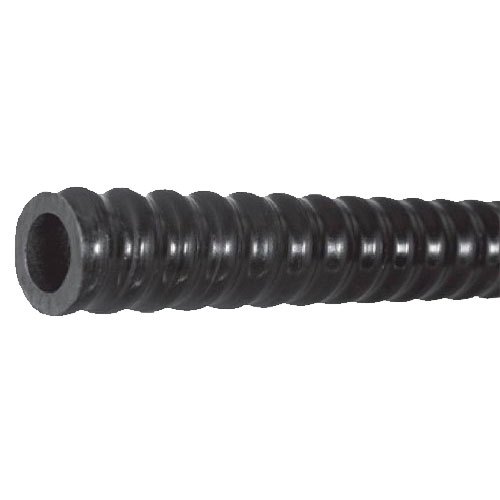
Due to space restrictions on the hillside and valley side, Self-Drilling Anchors (SDA) of 6 m length spaced at 2.5 m c/c in both directions for maximum height of 47.5 m above existing wall is proposed. The soil anchors shall function as passive mitigation measures to address global instability.

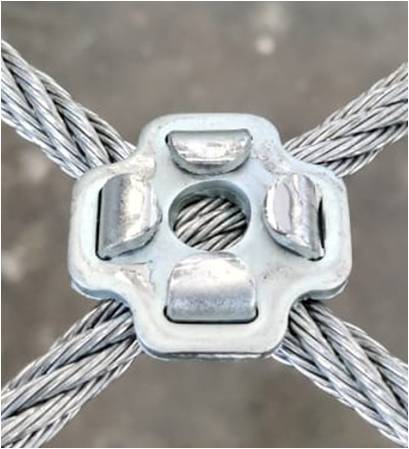
Considering the terrain and location of project, it has been proposed to provide the flexible fascia, i.e., high tensile steel wire mesh (TechRhombus as a Primary mesh and Double twisted wire mesh as a secondary mesh) for the exposed slope surface.

Project Outcome & Performance

Under this project, stabilization measures such as scaling of overhang rock cliffs, application of high tensile rolled cable net ,DT Mesh along with SDA have been envisaged without affecting existing structures, environment, and forest within the area. The protection is serving as desired by the authority. After stabilizing the affected vulnerable stretch of this road, uninterrupted traffic flow would certainly augment the regular movement of locals & by passers for their daily requirements in the region, which will naturally upgrade the economic conditions of the people belonging to the entire area.

Frequently Asked Questions
(FAQs)

The widening of NH-34 (Rishikesh–Dharasu Road) under the Chardham Highway Development Project disturbed slope stability. The steep cut slope (40–50 m high) with toe cutting, heavy rainfall, seismic activity (Zone V), and weak geology created a high risk of landslides, threatening road safety and connectivity.

Toe cutting during road widening destabilized the slope.

Steep slope angle (50°–70°) without intermediate benches.

Heavy rainfall and flash floods accelerating erosion.

Seismic vulnerability in Zone V.

Closely spaced joints at the top portion increasing risk of toppling failure.

Space restrictions limiting conventional retaining structures.

TechFab India proposed an integrated slope stabilization system:

Loose scaling/trimming of unstable rock patches.

Self-Drilling Anchors (SDAs) of 6 m length, spaced at 2.5 m c/c, installed to a maximum height of 47.5 m for global stability.

Flexible fascia system using:

TechRhombus High Tensile Rolled Cable Net (HRC) as primary mesh.

Double Twisted Wire Mesh (DT Mesh) / TechFab Metal Gabion as secondary mesh.

Anchors and mesh together formed a secured drapery system to stabilize exposed slope surfaces.

Anchors provide deep reinforcement, resisting sliding forces.

TechRhombus HRC mesh absorbs dynamic loads and prevents rockfall.

DT Mesh / TechFab Metal Gabion secures smaller debris and surface erosion.

Combined system ensures global and local stability without heavy excavation or rigid structures.

Flexible system adapts to slope deformations.

Requires minimal construction space.

Faster installation with reduced disruption to traffic.

Avoids deep foundations, lowering costs.

Environmentally sensitive, preserving forest and natural terrain.

The stabilization measures were successfully executed, ensuring:

Long-term slope stability at the vulnerable stretch.

Safe and uninterrupted traffic flow on NH-34.

Protection of locals and travelers, supporting regional connectivity.

Client satisfaction with performance and durability.

TechFab Metal Gabion

TechRhombus HRC (High Tensile Rolled Cable Net)

TechAnchor (Self-Drilling Anchors)