Home / Success Stories / Hill Side Rockfall Protection Measures for TRT Adit Take Off Tunnel Portal for Kwar Hydroelectric Project, Jammu & Kashmir
Kishtwar, Jammu & Kashmir, India | Chenab Valley Power Projects Private Ltd (CVPPL)
The Kwar Hydroelectric Project (540 MW) is a Run-of-the-River (RoR) scheme situated on the Chenab River in Kishtwar district, Jammu & Kashmir. Developed by Chenab Valley Power Projects Pvt. Ltd. (CVPP), the project was a key hydropower initiative aimed at harnessing the river’s potential in the Lesser Himalayan region. As part of the infrastructure, a Tail Race Tunnel (TRT) Adit take-off tunnel was constructed, which was connected to the TRT approach road via a bridge across the Chenab River. The project was located in geologically sensitive terrain characterized by complex rock formations and steep slopes. The focus zone included the slope above the TRT Adit take-off tunnel portal, covering approximately 6,372 sqm with an inclination of 70°–75°. The hillside slope above the tunnel portal posed a significant risk of rockfall due to its weak and highly fractured strata.
The instability of the slope threatened both the Adit tunnel portal and the bridge connecting to the TRT approach road, making it a critical concern for project safety and continuity. Considering the challenging geological, hydrological, and seismic conditions, appropriate slope stabilization measures were required to ensure the long-term safety and performance of the tunnel portal and associated infrastructure.
The slope above the TRT Adit take-off tunnel portal presented significant geotechnical challenges due to its unfavorable geological and environmental conditions. The exposed rock mass primarily consisted of greyish phyllite, ranging from moderately to slightly weathered, with an overlying 8–10 m thick layer of highly fractured and jointed phyllite. The presence of closely spaced discontinuities, a well-developed shear seam, and active seepage zones further weakened the rock mass, making it highly susceptible to instability. The site fell under Seismic Zone IV as per IS 1893 (Part 1): 2016, indicating a moderate to high seismic risk, which could trigger slope failures. Additionally, heavy seasonal rainfall increased pore-water pressure, accelerated erosion, and intensified weathering of the slope material. These conditions made the area highly prone to rockfalls and shallow landslides. Surficial instabilities and rockfall events posed a constant threat to the Adit tunnel portal and the bridge connecting to the TRT approach road; therefore, effective slope stabilization interventions were essential to mitigate risks and safeguard the integrity of the tunnel portal and associated infrastructure.
A comprehensive and robust slope stabilization system was proposed by TechFab India based on detailed geotechnical assessment and sound engineering judgment to address the complex site conditions and mitigate rockfall risks. The solution strategy incorporated multiple integrated measures, each targeting specific instability mechanisms observed at the site.
Scaling of loose and dislodged rock mass was recommended as an initial step to eliminate potentially unstable blocks and reduce immediate rockfall hazards. To protect the slope surface from further weathering and deterioration, a 100 mm thick dry shotcrete layer in two stages, reinforced with double twisted hexagonal wire mesh (Mesh size 10×12, 2.7/3.7mm wire dia, Zinc + Polymer Coated), was suggested to seal open joints and fractures.
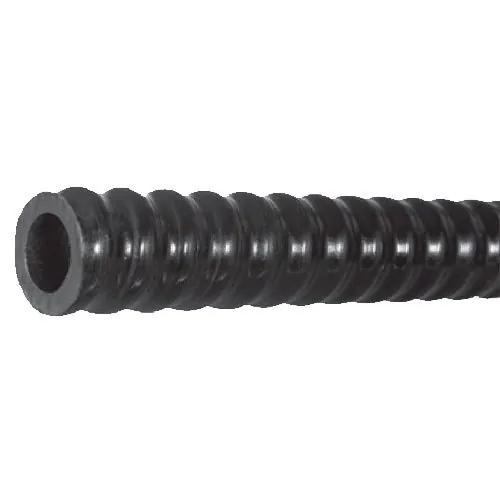
For enhancing overall stability, 32 mm diameter self-drilling anchors (SDA) of 12 m length at 2.5 m c/c in both directions were incorporated to provide effective anchorage. Consolidation grouting using 45 mm diameter holes up to 9 m depth at 5 m c/c was proposed to strengthen the fractured rock mass and control crack propagation.
In critical zones, TechFab’s high-tensile TechRhombus Mesh (SWK 400x400x10), along with double-twisted hexagonal wire mesh, was adopted to control surficial instability. Additionally, 6.0m high Rockfall Barriers (3000 kJ) and subsurface drainage using perforated PVC pipes wrapped in non-woven geotextiles were implemented to intercept falling debris and reduce pore-water pressure.
This well-engineered combination of mitigation measures, including dry shotcrete, self-drilling anchors, high-tensile mesh, consolidation grouting, drainage systems, and rockfall barriers, successfully addressed the complex site conditions. These integrated solutions effectively stabilized the slope and reduced the risk of rockfall events while addressing geological, seismic, and hydrological challenges. The interventions significantly enhanced the long-term safety and stability of the Adit tunnel portal, bridge, and adjoining slopes.
This project demonstrates TechFab India’s expertise in delivering reliable, high-performance slope stabilization solutions in challenging Himalayan terrains, setting a strong benchmark for similar high-risk hydropower and infrastructure projects.