Landslide Mitigation Measures for Tamenglong – Mahar National Highway (NH-137) in Assam

Dima Hasao, Assam, India |  National Highways & Infrastructure Development Corporation Limited (NHIDCL)

Overview

The National Highways and Infrastructure Development Corporation Limited (NHIDCL) undertook the widening and upgradation of NH-137 from Tamenglong to Mahur in Assam, covering a stretch from Km 116.480 to Km 156.489. The project site, located approximately 111 km from Silchar in the Dima Hasao district, passed through hilly and geologically sensitive terrain.

To enhance strategic connectivity and promote regional development and tourism, the Government of India initiated this road-widening project under NHIDCL. The corridor is geologically complex and lies in Seismic Zone V as per the Seismic Zoning Map of India, making it highly vulnerable to slope instability. Fragile sedimentary formations, steep slopes, and intense monsoonal rainfall further increased the risk of landslides and erosion.

Challenge

During the road widening of NH-137 from Tamenglong to Mahur, extensive hill-side cutting, along with the removal of vegetation and topsoil, was carried out to achieve the desired road width. This process exposed fragile geological formations comprising weathered rocks and loose overburden materials, significantly disturbing the natural slope equilibrium. The exposed surfaces were subjected to intense monsoonal rainfall and weathering effects, leading to increased pore water pressure, higher surface runoff, and reduction in the spacing of discontinuities. These factors reduced the shear strength of the slope materials (soil and rock), triggering both shallow and deep-seated failures along the hill slopes. Furthermore, the combination of seismic loading and saturated slope conditions posed a serious threat to the safety of the roadway and surrounding infrastructure. The exposed slope profiles along major stretches were moderately steep to steep, with heights ranging from 6 m to 42 m. The complexity of the terrain, coupled with geological and climatic vulnerabilities, made slope protection a critical requirement.

Solution

To address the slope instability challenges, a comprehensive and integrated slope stabilization approach, as suggested by TechFab India Industries Limited, was adopted for the project stretch between CH. 116.480 km and CH. 156.489 km. The solution focused on improving both global and surficial stability of the slopes while ensuring long-term performance under adverse geological and climatic conditions.

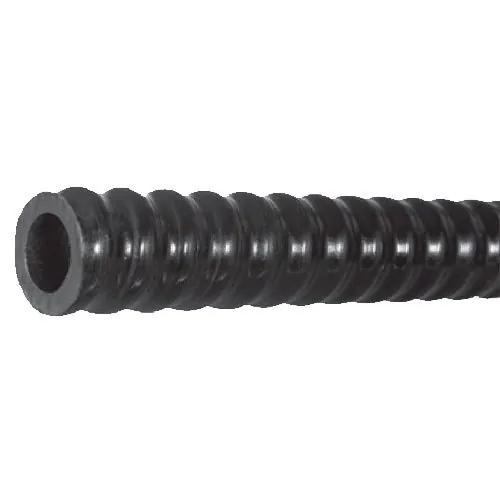
Slope regrading to a gentler inclination of 1H:2V, combined with systematic benching, was adopted to reduce destabilizing forces and enhance overall slope geometry. For structural reinforcement, a soil nailing system using Self-Drilling Anchors (SDA) was incorporated to improve internal stability and resist potential failure mechanisms.

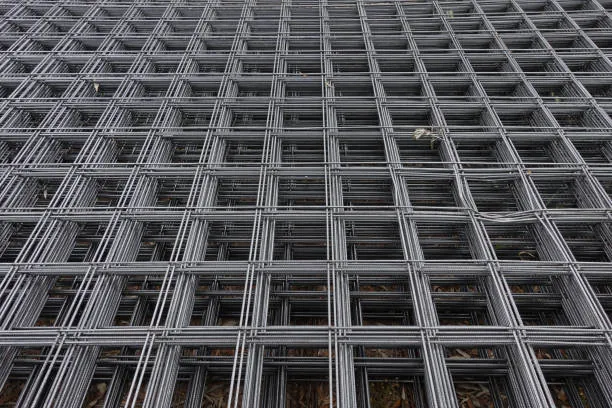
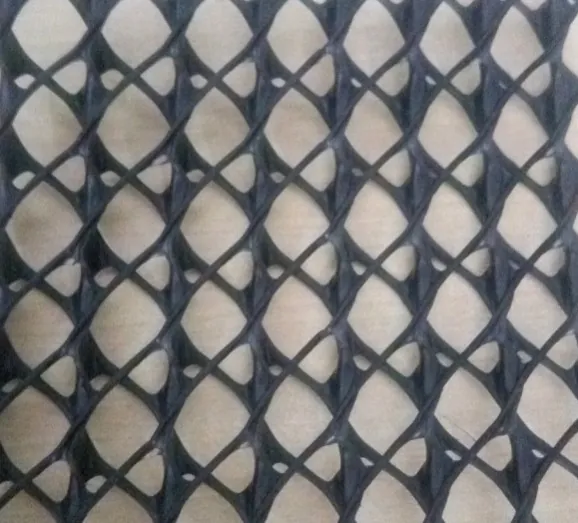
To control surface erosion and weathering, a flexible drapery system comprising high tensile steel wire mesh (TechFab Metal Mesh – TMM-50) was provided, ensuring surface confinement and long-term durability. This was complemented by the application of a 3D geosynthetic erosion control mat (TD-7000) along with hydro-seeding, promoting vegetation growth and enabling bio-engineering-based stabilization of the slope surface.

An integrated drainage strategy was adopted to address water-induced instability, incorporating subsurface drainage using half-perforated PVC pipes wrapped with non-woven geotextile to facilitate controlled seepage and reduce pore water pressure within the slope. This was supported by surface drainage measures to effectively manage runoff. Collectively, these measures provided a balanced solution addressing structural stability, erosion control, and hydraulic management, ensuring the long-term safety and resilience of the highway corridor.

Project Outcome & Performance

The integrated slope stabilization approach successfully addressed the challenges arising from complex geology, steep terrain, and intense rainfall. The combination of structural and bio-engineering solutions improved slope stability, minimized erosion, and enhanced durability. The project ensured safe and reliable road connectivity while supporting sustainable infrastructure development. The client was satisfied with the product quality, timely delivery, and technical support provided throughout the project execution