Home / Success Stories / Geosynthetic Protection System for Reservoir Lining Works at Greenko’s Pinnapuram Pumped Storage Project, Andhra Pradesh
Pinnapuram, Andhra Pradesh, India | Greenko
The Greenko Pinnapuram Integrated Renewable Energy Project (IREP), located in Andhra Pradesh, India, is one of the country’s flagship efforts to support the transition to clean energy. Developed by Greenko Group, the project integrates 1.2 GW of pumped hydro storage with 1 GW of solar and 600 MW of wind capacity, making it a pioneering example of large-scale renewable energy and storage integration in India.
A key feature of the project is its use of pumped hydro storage, which involves cycling water between two engineered reservoirs situated at different elevations. This process enables the storage of excess renewable energy generated during periods of low demand and its release during peak demand, thereby stabilizing the power grid and maximizing the use of intermittent solar and wind resources.
The construction of these reservoirs presented significant engineering challenges due to the site’s complex geology, including fractured and jointed bedrock with active faults. Ensuring the long-term impermeability and structural integrity of the reservoirs was critical to the project’s success. Traditional lining methods were deemed insufficient given the geological risks, prompting the adoption of a sophisticated multi-layer geosynthetic liner protection system.
The construction of the Pinnapuram pumped storage reservoirs faced significant challenges due to the geological complexity of the site. The underlying bedrock consisted of fractured quartzite, limestone, and schist, intersected by numerous faults and joints. These features created zones of weakness and variable permeability, raising concerns about the long-term integrity and watertightness of the reservoirs. One of the main issues was the presence of active faults and widely spaced joints, which could experience movement during seismic events or due to natural ground settlement. Such movements risked imposing shear and tensile stresses on any reservoir lining, potentially leading to punctures, tears, or loss of impermeability. Additionally, the irregular and angular nature of the rock surface increased the risk of mechanical damage to the liner during installation and operation. The high permeability of faulted and jointed zones further increased the risk of water seepage and internal erosion, which could undermine the embankment and cause environmental and operational problems. Conventional single-layer geomembrane liners were considered inadequate for these conditions, as they offered limited protection against both mechanical damage and ground movement. To address these challenges, a robust, multi-layer geosynthetic lining system was required-one capable of accommodating differential movements, providing enhanced puncture resistance, and ensuring long-term impermeability even in the presence of active geological features.
The design team, in consultation with geosynthetic experts and international best practices, developed a multilayer composite lining system with following objectives:
Impermeability: To provide a continuous, robust hydraulic barrier against water loss.
Mechanical Protection: To shield the geomembrane from puncture and shear forces due to rock movement.
Reinforcement: To accommodate differential movements and distribute stresses.
Durability: To ensure a minimum 50-year service life under site-specific conditions.
The proposed system consists of the following layers, from bottom (in contact with insitu strata) to top (exposed to water):
Layer No
Layer Name
Material Type
Function
Primary Reinforcement Layer
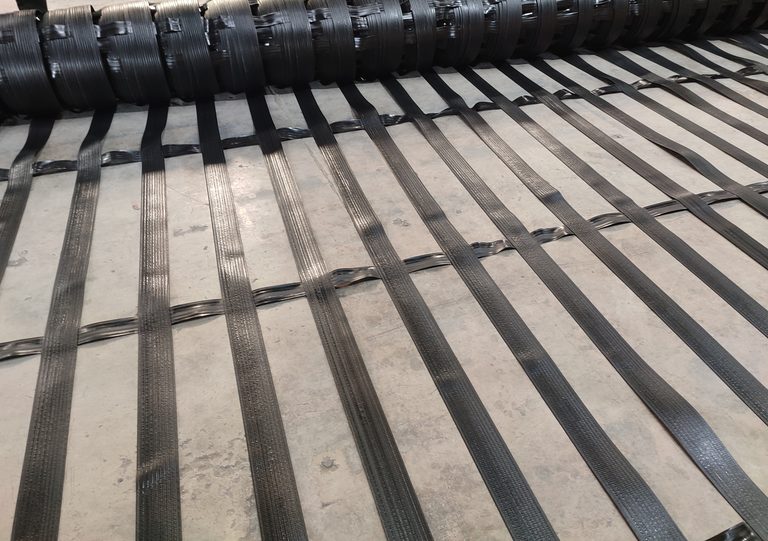
TechLink TL 350 Uniaxial Geogrid
Bridges faults and joints
Provides tensile reinforcement
Resists ground movement
Cushioning/Protection Layer
TechGeo PN70 PP
Non-Woven Geotextile
Cushions geomembrane
Protects against puncture from subgrade
Hydraulic Barrier
2.0 & 2.5mm HDPE Geomembrane
Primary impermeable barrier
Prevents water seepage
Protection / Separation Layer
TechGeo PN100 PP
Non-Woven Geotextile
Protects geomembrane from puncturing from armor layer
Secondary Reinforcement/ Protection
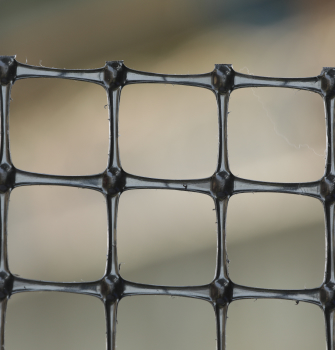
TechGrid PP3030 Biaxial Geogrid
Distributes loads
Protects geomembrane
Adds mechanical stability
Surface Protection/Armor Layer
Insitu Soil
Protects geosynthetics from UV radiations
provides surcharge load to geosynthetic materials
The Greenko Pinnapuram Pumped Storage Project successfully implemented a multi-layer geosynthetic lining system tailored to the challenging fractured rock conditions at the site. This innovative design provided exceptional impermeability and mechanical resilience, effectively preventing leakage and damage from fault movements and joint openings.
Key achievements include significantly reduced seepage rates, enhanced durability with a design life exceeding 50 years, and cost-effective construction compared to traditional lining methods.
This case demonstrates that well-designed geosynthetic composite liners can reliably protect reservoirs in complex geological settings, offering valuable insights for similar renewable energy and water infrastructure projects worldwide.